

1·
7 days agoI gotta take a leak so bad, I can taste it
I gotta take a leak so bad, I can taste it

“Good night” turns off all the lights in the house. I guess it’s silly/lazy because at midnight all the lights turn off anyway.
Or put a mic in the bathroom and make the LEDs yellow for pee sounds and red for fart sounds.
I’m kidding but I actually think this would be fun, but you’d need a way to differentiate sounds.

I don’t think it means what he thinks it means.

Ah.
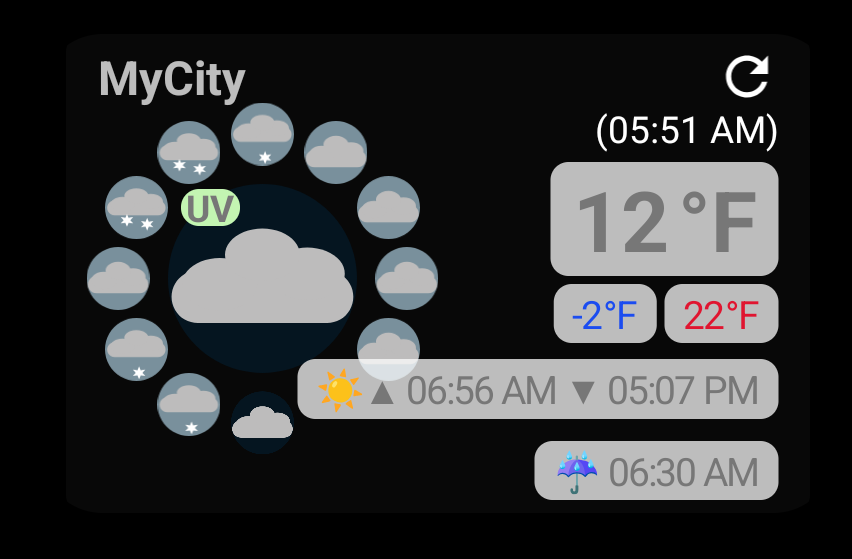
I use Cirrus becau I love its ingenious widget: it shows the next 12 hours of weather (not temperature) in a tiny space that’s super easy to read.
I don’t care if AI was used in its creation. I do care if it’s FOSS/libre.
And also, it’s a bit weird to me that copying YouTube’s UI is considered good. I havent used YouTube in a long time, but I recall there being some good aspects and some bad. Why not create your own vesion of a UI?
I agree that more options is a good thing, and that activitypub would be a plus. But FYI, I wont be using it because of the license. I use only FOSS whenevr possible.

For more specific filtering, rather than an entire community, on Android i use Voyagers, which allows you to filter out specific keywords. On desktop I self-host Tesseract, which I think has the same functionality.
Can I?
Server01: 64 Server02: 19 Plus a bunch of sidecar containers solely for configs that aren’t running.

I was going to submit Journiv for review at It’s Really FOSS but one of their conditions to accept a project is that the project claims to be open source - and I can’t find anywhere that Journiv claims to be open source!
In this discussion on Journiv’s github Swalab Tech says:
You’re absolutely right, Journiv’s core is source available, and it currently includes a built Flutter web version client…As of now there are no plans of making client’s source available.
…
I can understand your concerns so let me answer them in detail.
First thing first, why is frontend code not open source:
…
Fyi, you could consider the app server as source available, but the web client is proprietary and closed and its license probihibits reverse engineering and the like.
Journiv looks pretty cool and i want to try it, but I only use FOSS software whenever possible and Journiv is not under an open source license. The debatably-FOSS license covers the server and prohibits commercial use, which i dont like but maybe could live wirh, but the web client’s license is not debatable: it is clearly not FOSS because it’s proprietary software owned and copyrighted by Swalab Tech and is not licensed under the PolyForm Noncommercial License 1.0.0.
Here’s an LLM’s summary of why it’s not FOSS: The PolyForm‑Noncommercial 1.0.0 is a non‑commercial license that blocks any commercial use of the code without a separate written agreement. That places it near the bottom of most freedom scales, such as the Open Source Definition or the Free Software Definition. FOSS people would point out that the licence allows use, copy and modification for personal or non‑commercial purposes but disallows commercial deployment or monetised use, so it fails the “freedom” test. The licence also requires contributors to assign all rights to the owner, which removes copyright retention and any freedom to license derivatives. Because the web client is explicitly excluded from the licence and cannot be hosted or redistributed as part of a service, the package is effectively a hybrid licence that is not accepted as open source. On a freedom scale of 0 to 100, it would be roughly 10–20, and FOSS communities would typically call it “not open source” or “proprietary‑style” and advise against using it in a truly FOSS project.
Not positive, but I think you left in a reference to real info (twilightparadox.com) instead of “example-fying” it (mydomain.com), in the paragraph just before section 4:
For example say I have home-assistant running on a Pi with the local address 192.168.0.11, I could create a subdomain named ha that has the value mysub.twilightparadox.com then create the following nginx config
server{
	listen 80;
	server_name ha.mydomain.com;
	resolver 192.168.0.1;
	location / {
		proxy_pass http://192.168.0.11/;
	}
}
When nginx sees a request for ha.mydomain.com it passes it to the address 192.168.0.11 port 80.
I self-host a CA server with [step-ca](https://github.com/smallstep/certificates], and I also use it to create my mTLS certs.

It’s AI. I used self-hosted InvokeAI to inpaint a new window scene for OP’s cat.





But it also enforces the “keep everything just in case” mentality/habit. This situation feels good precisely because it beat the odds. 🙂