Mint’s a native plant.
Don Piano
- 15 Posts
- 124 Comments
Joined 2 years ago
Cake day: June 24th, 2024
You are not logged in. If you use a Fediverse account that is able to follow users, you can follow this user.
 30·1 month ago
Lovecraft was especially racist by the standards of his time, though. https://www.reddit.com/r/writing/comments/1897rk2/was_lovecraft_racist_even_by_the_standards_of_his/
It’s a pain perceiver where capsaicin activates it.
Our senses run on chemicals, and that means sometimes chemicals activate these senses. Capsaicin is similar to a different chemical that our bodies use as signal, and binds to the receptor instead.
You could imagine it like a vending machine that’s supposed to dispense soda if you put Euro coins in, but it’ll equally dispense soda if you put other flat pieces of metal in it.
Antiemetics prevent you from puking. It’s the antimemetics division which doesn’t exist.
Good author, too, iirc. I think this story’s also by them: https://qntm.org/mmacevedo
Ah, a game of Unknown Arnies.

 10·3 months ago
Skill issue. Learning to love an academic discipline beyond the flashy YouTube video level and into the depths of actually doing it every day involves, among other things, a lot of work, such as when you reconceptualize what it’s all about and where the beauty lies.
“I fucking love science” and loving science are different games.
Hot dang, a berry!
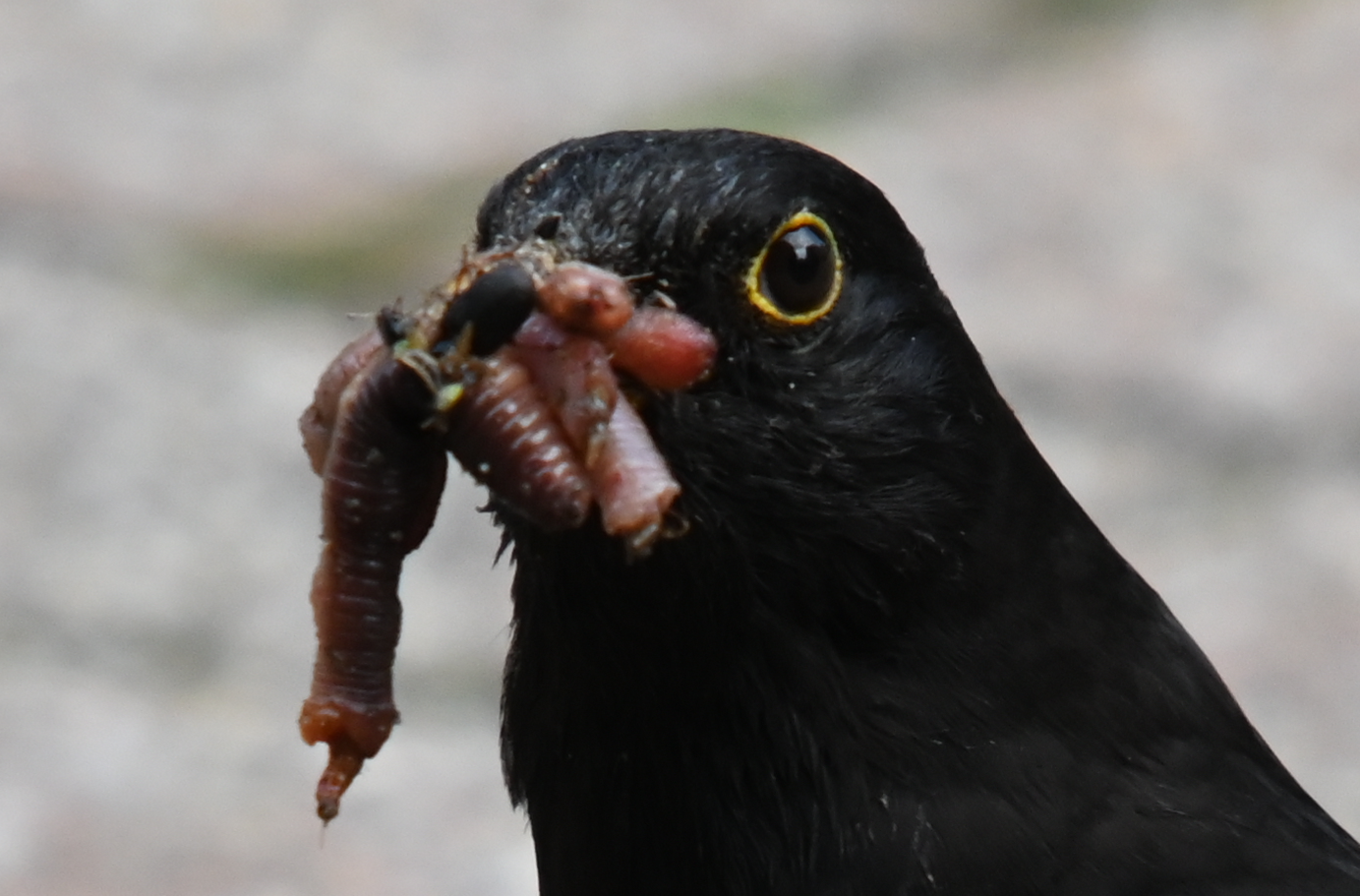
Great shot

 4·4 months ago
If you want I can try to put half a minute into an attempt so you can check the box. I can throw in a pitch for flattening eastern germany (bavaria to Mecklenburg-Vorpommern) for good measure, if you like.
Hey now, let’s not reduce him to his being a self-proclaimed “biological determinist” on gender.
He also quoted/referenced racists for his stances. (E.g. “Nits make lice” from Chivington, who killed Cheyenne people indiscriminately, gygaxed as a justification for why its lawfully good to kill orc babies https://www.reddit.com/r/DnD/comments/dtpgim/gygax_on_lawful_good/ )
Fun: The leak looks the same as if it had sprung from german!
I think it’s making fun of the person doing the explaining, because they are overwhelming someone with an overly intense explanation.

Oop, a repeat comment, sorry
Werther’s is a German candy and at least popular in Europe and the US
Root beer would be cool to be more popular in Europe, I’d like more selection here…
When I studied with a researcher on this, I learned it even stronger than “not all”: Most perpetrators of child sexual abuse are specifically not pedophiles. By focusing on pedophilia (and there focusing on expressing anger rather than effective preventative measures, which feature support rather than trying to feel morally superior), resources are not only overallocated in one place but underallocated in another, thus making the problem worse
The first one is the best one, great timing, framing, lighting!
I recommend finding a different statistics teacher, preferably one who isn’t a comic and one who knows what the difference between a standard deviation, a standard error, and a 95% interval is. Those should not be too hard to find, it’s relatively basic stuff, but many people actually kinda struggle with the concepts (made harder by various factors, don’t get me started on the misuse of bar charts).
Oops, should have multiplied those intervals with 1.96, ao here again:
9 - 49%
16 - 38%
25 - 30%
100 -16%
400 - 8%
That’s how a standard error with normal-ish data works. The more data points for the estimation of a conditional mean you have, the fewer of the data point will be within it. For a normal distribution, the SE=SD/√N . Heck, you can even just calculate which proportion of the distribution you can expect to be within the 95% CI as a function of sample size. (Its a bit more complicated because of how probabilities factor into this, but for a large enough N it’s fine)
For N=9, you’d expect 26% of data points within the 95% CI of the mean For N=16, 19% For 25, 16% For 100, 8% For 400, 4% Etc
Out of curiosity: What issue did you take with the error margin not including most data points?
To be honest, I doubt Munroe wants to say “if the effect is smaller than you, personally, can spot in the scatterplot, disbelieve any and all conclusions drawn from the dataset”. He seems to be a bit more evenhanded than that, even though I wouldn’t be surprised if a sizable portion of his fans weren’t.
It’s kinda weird, scatterplot inspection is an extremely useful tool in principled data analysis, but spotting stuff is neither sufficient nor necessary for something to be meaningful.
But also… an R^2 of .1 corresponds to a Cohen’s d of 0.67. if this were a comparison of groups, roughly three quarters of the control group would be below the average person in the experimental group. I suspect people (including me) are just bad at intuitions about this kinda thing and like to try to feel superior or something and let loose some half-baked ideas about statistics. Which is a shame, because some of those ideas can become pretty, once fully baked.







No, it’s not. Standard error of the mean estimate is SD/sqrt(n-1), so it depends on the signal/effect to noise ratio how much you can learn from it. SE of the mean difference for a between subjects design is slightly different but not miles off from that. You can squeeze even more info out of it by using within subjects designs.
What makes you think a sample size of 50 is irrelevant?