
We all know that history is full of all sorts of weird and whacky ideas, beliefs and concepts. For example, did you know that medieval physicians believed that cutting a pigeon in half could cure you of the bubonic plague?
Today, we will be looking at a peculiar concept that originates primarily from the 16th Century: the homunculus.
Now, I’ll be perfectly honest: when I first came across the concept of the homunculus, I actually didn’t think much of it — I thought it was just an old thing that some people believed in once, and there wasn’t anything else to it, and that was that. However, after researching the concept (and its associated term) I realised that this is something which actually had a rich and (sadly) overlooked history. Thus, I present it to you (in as condensed as possible) form, today.
Concept

In a nutshell, the original concept of a homunculus was: it was believed to be a small person or living being, which alchemists believed that they could create via alchemy. It was believed to be a small person that differed from a baby in that it was not conceived within the womb, but created artificially with alchemic means and methods. The word ‘homunculus’ itself is derived from the Latin for ‘little person’ or ‘little man’. Interestingly, the concept of the ‘homunculus’ has drawn comparison to the myth of the Jewish Golem. Like the Golem (which is believed to be a clay or mud statue moulded by humans, and brought to life via mystic Hebrew methods) the homunculus was believed to be a small human-like body that could be grown and brought to life via alchemic methods.
History of the belief

Whilst the concept of humanity creating artificial life had existed (as a concept) for centuries [see Kitāb al-Nawāmīs from the 9th century, and the work of Arnold of Villanova from the 13th century] the first mention of the homunculus specifically in the context of a small being crafted via alchemy appears in the writings of the Swiss alchemist, chemist and theologian Paracelsus (who, fun fact, may have given the element Zinc its name) (Pictured above) in his book “De Natura Rerum” (Of the Nature of Things)” in 1537. The book itself (and the claims made, including those made of the homunculus) was highly debated even at the time of its publication. Strangely, in an earlier publication (“De Vita Longa” (1527)), Paracelsus originally described the Homunculus as a different concept entirely: he described the homunculus as “a small statue made of wax, intended to ward off evil spells”, seemingly reminiscent of a gargoyle or a Chinese Guardian Lion.
In the first chapter of “De Natura Rerum (of the Nature of Things, 1537)”, the following method of producing a homunculus is proposed:
Let the Sperm of a man by itself be putrefied in a gourd glasse, sealed up, with the highest degree of putrefaction in Horse dung, for the space of 40 days, or so long untill it begins to bee alive, move, and stir, which may easily be seen… This wee call Homunculus, or Artificiall [Man?].
Evolution of the term homunculus

Obviously, at this point, you can probably guess that the concept of the homunculus as described by the early alchemists is not real. However, that doesn’t mean that the term ‘homunculus’ is a redundant term — in fact, the term is still used to this day, in modern genetics, but even as early as the 17th century, the concept appears to have begun to have been used in a more scientific setting. One of the earliest examples of this is the study of sperm cells by Antonie van Leeuwenhoek (pictured above) in the 17th century, whose research on sperm cells led him to believe that the cells were effectively a ‘tiny version’ of the human being that the cells would subsequently become.
Centuries later, the term homunculus was reintroduced to the world of medicine, albeit with a significantly different meaning.

Wilder Graves Penfield (1891-1976, pictured above) is credited with introducing the term to the field of neurology, in reference to the projection of motor and sensory functions onto brain models. (Note: Other scholars subsequently used the same term for a variety of concepts in medicine, however they are too numerous and too complex to aptly summarise here; you can read more about them in their works).
But by far, the most notable use of the term in the field of medicine is the Cortical homunculus.

This term (derived from the same meaning as the original, I.e. ‘little man’) is actually a distorted representation of the parts of the human brain which control specific body parts (the diagram, as the example shown above, appears to show a distorted ‘little man’, hence the name, I think).
That is the evolution of the concept of the homunculus, from a tiny, man-made man, to a brain-mapping diagram.
sources
1] https://worldneurologyonline.com/article/the-homunculus-from-paracelsus-to-penfield/
Thanks for reading!
Play with me Edward!
just remember, trying to create a homonculus with your brother will cost you an arm and a leg
What is this?
Fullmetal Alchemist. Anyone that’s watched it knows that term lol.
Ah. I haven’t seen it lol
It is honestly amazing that you put so much research into the term homunculus without ever finding its most well known modern pop culture use
I thought the same thing. Kind of wild that’s not on the first page but I guess it’s been a while since the anime.
That, plus I’m not an anime fan. Like, at all. Honestly, I couldn’t even tell you the first thing about anime.
I don’t like anime either but Fullmetal Alchemist: Brotherhood was good tbh.
Yeah I think people here need to step back and recognize that not everyone is a weeb.
I’ve never seen the show and I’m aware of the concept of humonculus
In the english subtitles it’s called “the dwarf in the flask”.

Also Hellboy
Actually, I first encountered the term on YouTube — one of them ‘mysterious YouTube videos’ compilations where someone had claimed to made one with a chicken egg or something. That’s what led me to research the topic. Also, I only used historical search terms like ‘homunculus alchemy’ or ‘homunculus history’ which might explain why I didn’t see it.
You are right, a search for “homunculus alchemy” doesn’t put FMA on the first page of results for me either.
Maybe I’m just too anime coded and it isn’t as far reaching as it feels like to me.
Possibly. I personally don’t watch (or even know the first thing about) anime, which probably doesn’t make it any more likely I’d even know I was looking at it, let alone see it in my searches
I believe they were chimera in the anime. The homonculi were the ‘seven deadly sins’ creations.
You should it’s pretty good
Edo… Wahdo…
O…nii…san…
Fantastic post. This is why I’m on this site 🤌
Hey, thanks for reading!
Worth nothing that this is also why so many old paintings of baby Jesus have him looking like a tiny old man. The concept of the homunculus influenced religion, because Jesus was supposed to be a perfect being. But if he is perfect, he can’t change as he ages. Because if you change perfection, it is no longer perfect. So they believed he was born looking like a tiny baby-sized adult. And that means a lot of medieval paintings have baby Jesus looking like a grumpy old man:
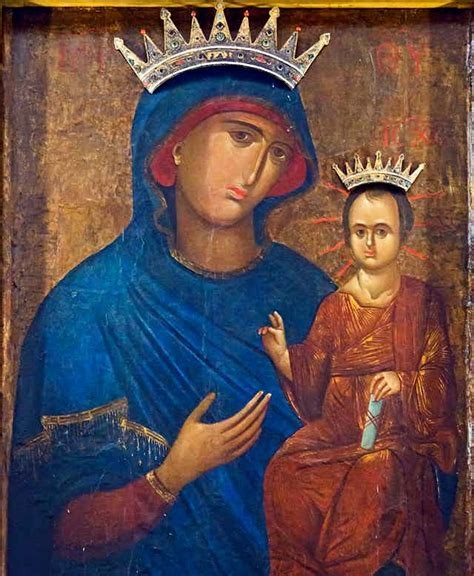
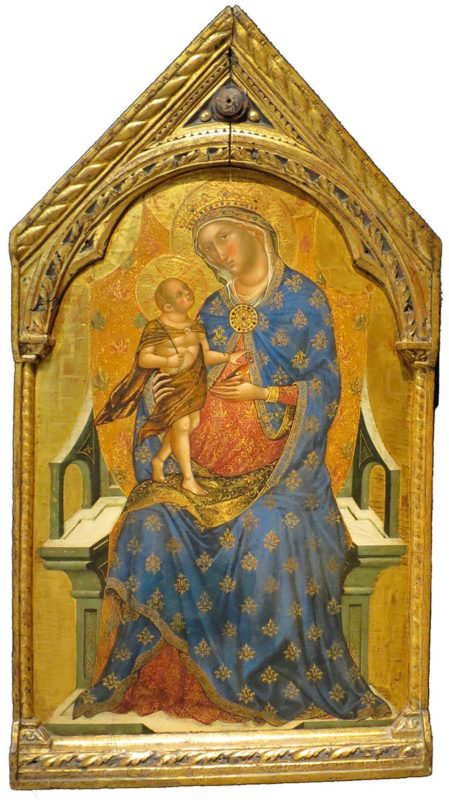
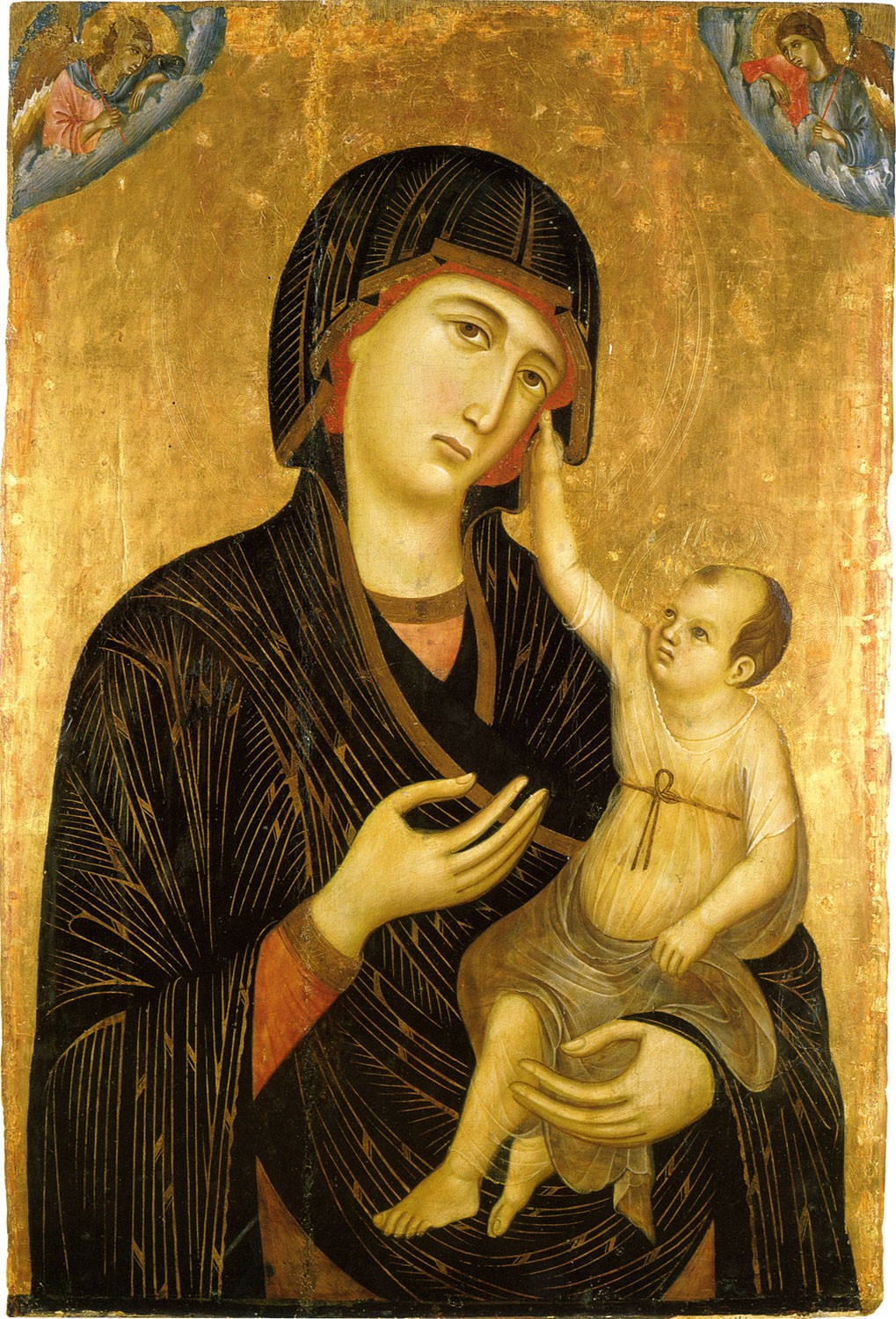
I love that he’s even got a receding hairline. That’s perfection!
That is interesting. Not sure exactly how it relates to the homunculus (unless people perceived the homunculus as trying to grow a perfect being, though I can’t say I’ve ever heard of that) but it’s certainly an interesting point about perceived perfection never changing and that’s what all them paintings symbolise.
Putrefied sperm in horse dung = immaculate conception
And that, peeps, is why I don’t believe in alchemy!
Thanks for sharing that was an interesting read!
Thanks for reading!
The first image both creeped me out and fascinated me 🤣
lol, it is certainly strange! Wait until my ‘Danse Macarbe’ post
You’re fun, I like you lol
Why thanks!
Did you watch Small Prophets?
Brilliant show
Probably my favourite series this year
No
Then fucking do it, now!
I’m not going to watch it
Oh yeah? We’ll see about that
lol I’m not going to watch it
Jeromy. Do you even know what a homunculus is?
Aaah i see, so the 4chan cum jar guy was just making homunculi… The more you know!
wanna come to my birthday party?
As it pre-dates our knowledge of sperm and ovums, I think there’s another aspect to this revealed in the English language (and likely others), where semen is referred to as “seed”, and wombs are referred to as “fertile” or “barren”. The view being that conception is like a field, where you plant a seed and the ground nurtures it. You can also take a seed and germinate it and grow it in water (for a while, depending), so if you take the man’s “seed” and give it a place to grow, won’t it grow into a person because it’s a seed?
I knew golems, being Jewish, but never really thought about homunculuses as being related. Guess they are. I know homunculuses from video and tabletop games mostly. Usually there’s a letter for golems and writing and stuff.
I’m not sure they’re ‘related’ per se. But they are certainly comparable (maybe the legends came from the same/similar sources maybe?) idk.
The concept of making a creature to do one’s bidding is probably very old indeed! And very tempting. And one that won’t grow up and leave home eventually unlike making a human!
True. I’m not 100% sure if that was the historical purpose of homunculus (or even what their purpose was other than to make one) but I guess it could be.
The fact that we live in a world full of robotics and other things we’ve made that do everything for us speaks volumes to your point though, I do have to say that.
I guess, in a legacy kind of way, we’re still working on that homunculus, just one made out of metal and plastic, numbers and code.
Ted Chiang had a short story called “Seventy-Two Letters” that did a really interesting job of tying the two myths together. If you’re into scifi/fantasy stuff, it’s worth checking out.
Nice work!! Ive heard the term, and one of the characters in the board game Smallworld is a homunculus, but didnt really know what it was.
Thanks for reading! That’s interesting about that game
Its very fun. Kind of like mild DND mixed with risk. Easy enough where non board game players picked it up fast. Lots of great expansions too.
There’s a great podcast called “the constant” that dedicates a few episodes to alchemy with an episode on the homunculus. Check it out.
Oh wow! I’ll definitely look into that, thanks!
Origin of trueborns?